
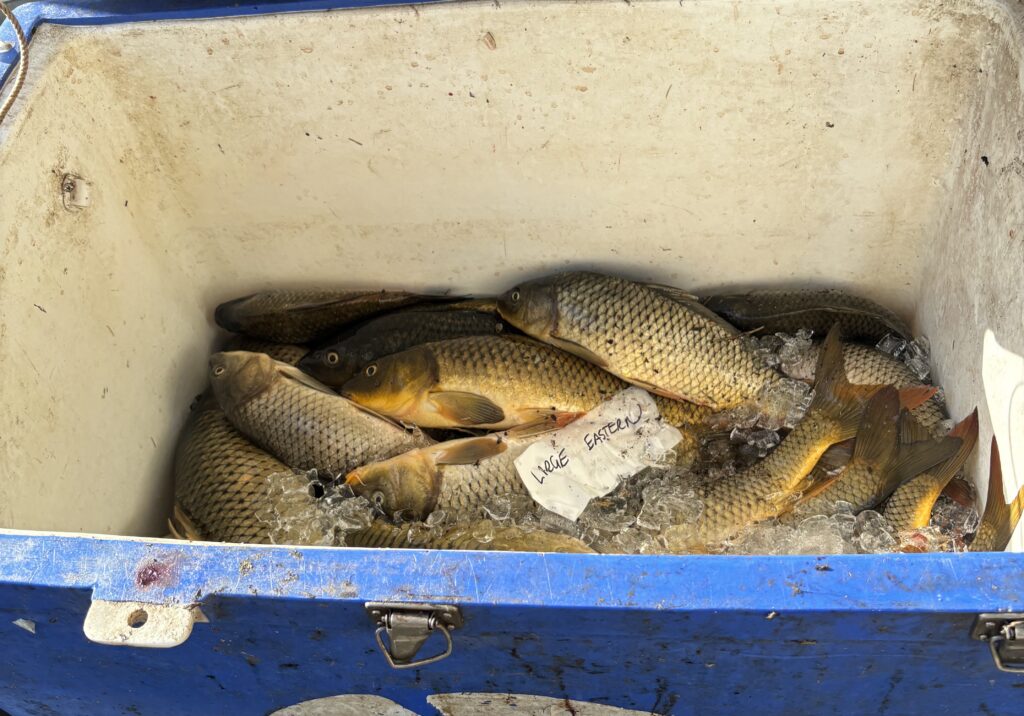
Feral carp continue to wreak havoc throughout Perth wetlands, as scientists pin their hopes on an introduced herpes virus to kill the invasive species.
The highly contagious water-borne virus was first meant to be introduced into the Murray-Darling Basin in 2022, under the federal $15m National Carp Control Plan – but that has been delayed until 2028 under instruction from the previous environment minister, Murray Watts.
Carp (Cyprinus carpio and C. rubrofuscus) originate from East Asia and the domesticated and ornamental variety, koi, have since the 1960s invaded Perth waterways after being dumped or accidentially released into the systems.
The bottom-feeding, feral fish destroy the ecology of native wetlands by stirring up sediment, wiping out other fish species and eventually taking waterways. Previous control methods have failed to curb numbers, due to the species fast reproductive rates.
Murdoch University freshwater ecologist Thomas Ryan said researchers think the virus is effective and safe.
“The Department of Agriculture, Fisheries and Forestry has at least two more years of trials before it (the virus) will be released into the Murray-Darling River system,” Mr Ryan said.
“When (and if) it is released in the eastern states, the results will provide the background for discussion on its release in WA.”
The virus works by damaging the kidneys, gills and skin of koi fish and scientists hope to target large schools.
The Centre for Invasive Species said there is no evidence this will cause harm to humans, although research last year in a peer-reviewed CSIRO journal found that decomposing organisms may release the virus back into the water if dead fish are not efficiently removed.
This could pose a risk to aquaculture farms and human health, they say.
The WA government has long battled with introduced fish, with carp finding its way into the state in 1947, according to PestSmart.
Officials have attempted to remove the fish and restore various wetlands throughout Perth, most recently investing in demonstrative research by scientists at Murdoch University.
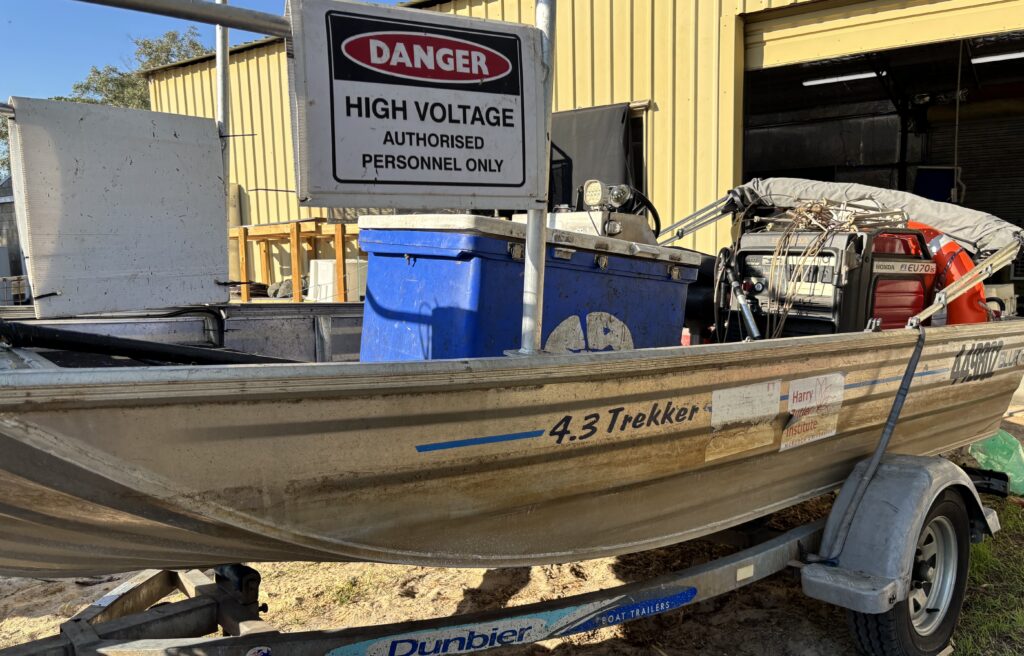
Mr Ryan said recent government funding has allowed the electrical stunning and removal of feral koi from 21 wetlands across Perth’s south-west.
“Abundance and direct impacts have been reduced in smaller wetlands and population explosions are being limited in larger wetlands by extracting large numbers of the breeding population,” Mr Ryan said.
Woodvale Waters Friends of Beenyup Channel coordinator Bryan Saunders said he thought the virus would be “fantastic” if it were to happen, although people are “gun-shy” of management strategies involving this form of biological control.
“Unless we do something in Perth, we’ll probably have the same type of problem to some extent in the Murray-Darling Basin, where these things (koi) make up 90 per cent of the wetlands biomass,” Mr Saunders said.