
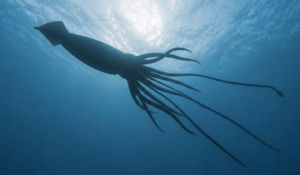
A thought to be extinct species of fish and a giant squid has been discovered in Western Australian waters, thanks to a modern-day DNA sequencing tool that filters genetic materials in marine systems.
In the past two months, Curtin University and indigenous researchers have used the technique, called environmental DNA testing, to detect a thought-to-be-extinct perch species in the Perth Hills and new species in two gorges in Exmouth.
The technique made international headlines last month when traces of a squid, Architeuthis dux, that can reach the size of a bus was detected in multiple samples across two of Exmouth’s Ningaloo canyons.
University of Western Australia molecular ecologist Georgia Nester said the team of researchers shared a “remarkable moment”, detecting more than 200 species throughout the canyons, including multiple samples of “rare” giant squids and “species never before recorded in Western Australian waters”.
“Giant squid are one of those animals that capture people’s imagination because they’re so rarely encountered, especially alive in the wild,” Ms Nester said.
“There hadn’t been a confirmed record from this part of Western Australia for more than 25 years.”
The monitoring tool uses filters to collect animal and plant cells, such as skin and mucus, for later processing and DNA sequencing identification
It was most recently used by Booryul Bah Bilya (BBB) rangers across the Helena River catchment, where they discovered living evidence of a previously thought to be extinct species, called Balston’s pygmy perch.
BBB executive director Francesca Flynn said the discovery is incredibly significant and strengthens the move for long-term protection of the Helena catchment as one of Perth’s most significant and intact natural landscapes.
“It highlights the importance of investing in long-term, community-led programs like Booryul Bah Bilya and the power of community and government working together, led by Noongar Traditional Owners and modern scientific techniques like eDNA, to achieve the best outcome for country,” Ms Flynn said.
Curtin University environmental scientist Austin Guthrie said the non-invasive tool allows for ind
ividual species to be detected more efficiently.
“It’s (environmental DNA testing) been around for over a decade, but it’s evolving very quickly and improving very rapidly, which is very exciting,” Mr Guthrie said.
“I think cost efficiency is only going to go up in the future, which is a good thing, making it cheaper for researchers and community groups.”